The Best Approaches for Review Acquisition
Trust is a must for home service businesses. Every completed job becomes a potential growth moment. Because of this, review acquisition directly impacts local visibility, customer trust, and booking volume.
However, not all review collection methods perform equally. QR codes, review cards, and follow-up texts each influence customer review behavior in different ways. So, the key question becomes which method actually converts best for home service businesses.
QR Codes for Review Acquisition
QR codes drive immediate action by removing friction at the exact moment of customer satisfaction. In fact, customers scan and leave a review in seconds without searching, typing, or navigating websites. As a result, this speed matters in home service environments because technicians finish work while customer satisfaction is at its peak. Consequently, that moment creates the highest conversion potential.
Moreover, QR codes standardize the process across teams. Every technician follows the same workflow, which reduces missed opportunities and improves consistency across the entire business.
In practice, QR codes can be deployed in several effective formats:
- Phone or tablet display at job completion
- Sticker or card attached to technician clipboard
- Digital QR screen shown before leaving the site
Therefore, customers always receive instant access to review platforms without confusion or extra steps.
Additionally, when businesses use a Google and Yelp QR code generator, they eliminate friction and guide customers directly to the correct review pages.
Review Cards and Their Limitations
Review cards do provide a physical reminder. However, they depend heavily on future customer action, which introduces delay immediately after the service ends.
Once the technician leaves, urgency drops significantly. As a result, customers often forget, misplace, or delay the action entirely.
Even when they retain the card, they still need to search for the business online, which adds friction and reduces conversion rates.
Still, review cards serve specific supporting roles such as:
- Reinforcing brand visibility after service
- Acting as backup reminders for customers
- Supporting offline marketing touchpoints
Nevertheless, they perform poorly as a primary review acquisition method because they do not trigger immediate action.
Are Follow-Up Texts Good Enough?
Follow-up texts allow businesses to reach customers after service completion. In addition, this method helps recover missed opportunities from the initial interaction.
However, timing becomes a critical limitation. Once customers shift focus, their motivation to leave a review naturally declines.
Typically, businesses use structured follow-up workflows such as:
- Automated text sent hours after job completion
- Reminder messages sent 24 to 48 hours later
- Personalized technician follow-ups
- CRM-based review request sequences
Even though these systems scale well, customers still need to stop what they are doing and take action later. Consequently, conversion rates remain lower compared to in-the-moment requests.
Moreover, this method depends on accurate phone numbers. If data is missing or incorrect, the system loses effectiveness entirely.
Direct Comparison of Conversion Performance
Overall, each method performs differently based on timing, friction, and customer behavior.
QR codes capture reviews instantly during peak satisfaction. In contrast, review cards delay action and rely on memory. Meanwhile, follow-up texts depend on later attention and reduced urgency.
Because of this timing gap, QR codes consistently outperform the other methods in home service environments.
To summarize the differences:
- QR codes remove friction and convert immediately
- Review cards rely on delayed action and recall
- Follow-up texts depend on external timing and attention
In addition, when paired with a QR code for Yelp reviews and Google reviews, businesses can directly guide customers to the most important platforms for local SEO and visibility.
Therefore, QR codes not only improve speed but also simplify decision-making for customers at the exact moment of satisfaction.
What Actually Works Best for Home Service Businesses
Home service businesses operate in high-trust, in-person environments. Timing plays a key role in conversion success. Therefore, the best results happen immediately after job completion. Satisfaction is highest at this moment.
At this point, technicians are already speaking directly with customers. As a result, QR-based systems become especially effective.
A high-performing workflow typically looks like this:
- Technician completes service
- Technician confirms customer satisfaction
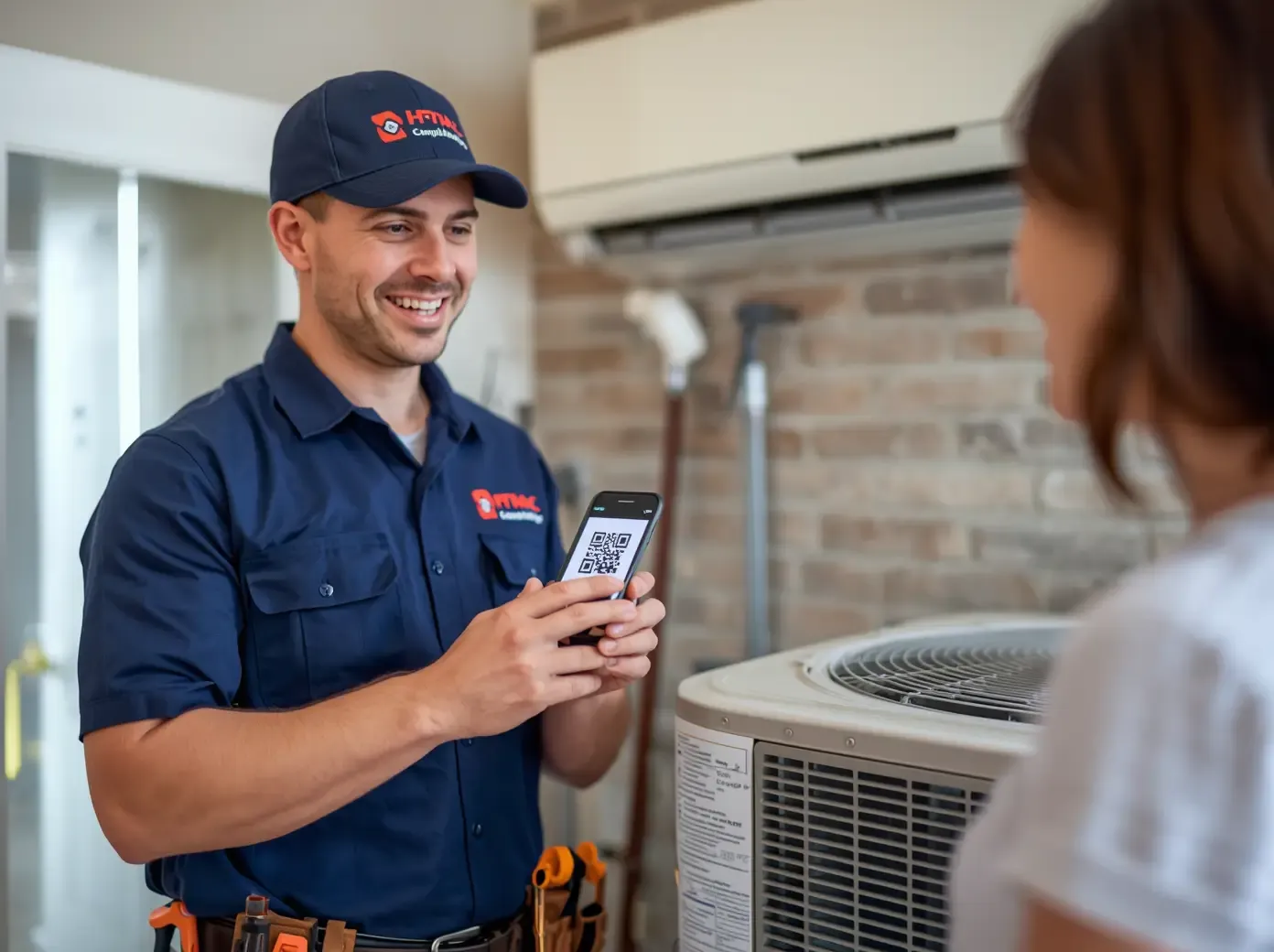
- Technician presents QR code on phone or tablet
- Customer scans and submits review immediately
As a result, this structured flow consistently outperforms delayed methods.
While review cards and follow-up texts still contribute value, they mainly function as secondary support tools rather than primary drivers of review acquisition.

Acquire More Reviews with QR Pad
QR Pad simplifies review acquisition from start to finish. Instead of relying on delayed follow-ups or customer memory, you can capture reviews at the exact moment of service completion. As a result, your business collects more feedback with less effort and fewer missed opportunities.
In addition, QR Pad acts as a complete QR code manager for your team. You can generate, organize, and deploy Google and Yelp review QR codes across every technician and job. Over time, your entire workflow stays consistent, fast, and conversion focused.
